ACADEMICSQur’an, Tajweed, Dars-e-Nizami, language and useful contemporary learning
ACADEMIC · SCHOLARLY · FORMATIVE UNITS
A connected academic, scholarly and formative ecosystem.
Qur’anic education, Dars-e-Nizami, useful contemporary learning, Dar-ul-Ifta, research, library resources and Khanqah formation each have a distinct identity while remaining part of one institutional mission.
SCHOLARLY SERVICESDar-ul-Ifta, research and learning resources
FORMATIONAdab, Taqwa, reform, responsibility and service
INSTITUTIONAL STRUCTURE
Nine clear institutional units. One connected learning mission.
Each unit has a distinct purpose, visual identity, relevant resources and a direct next step.
 01
01Qur’anic Studies
Tahfeez, Nazra, Tajweed and supervised recitation pathways with disciplined revision and character formation.
 02
02Dars-e-Nizami
Structured study of Arabic, Hadith, Fiqh, Tafsir and the classical Islamic sciences.
 03
03Arabic & Contemporary Learning
Arabic language foundations alongside useful contemporary learning that supports the wider Jamia mission.
 04
04Computer & Digital Literacy
Responsible computer education and digital literacy according to student level, facilities and academic schedule.
 05
05Dar-ul-Ifta
Confidential questions, authorized Mufti review and a controlled archive of approved public Fatawa.
06Idarat-ut-Tahqiq
Research planning, source review, scholarly editing, curriculum studies and controlled publication decisions.
 07
07Research Center
Fifteen specialist departments covering Qur’anic sciences, Hadith, Fiqh, heritage, thought, finance, contemporary issues and digital research.
 08
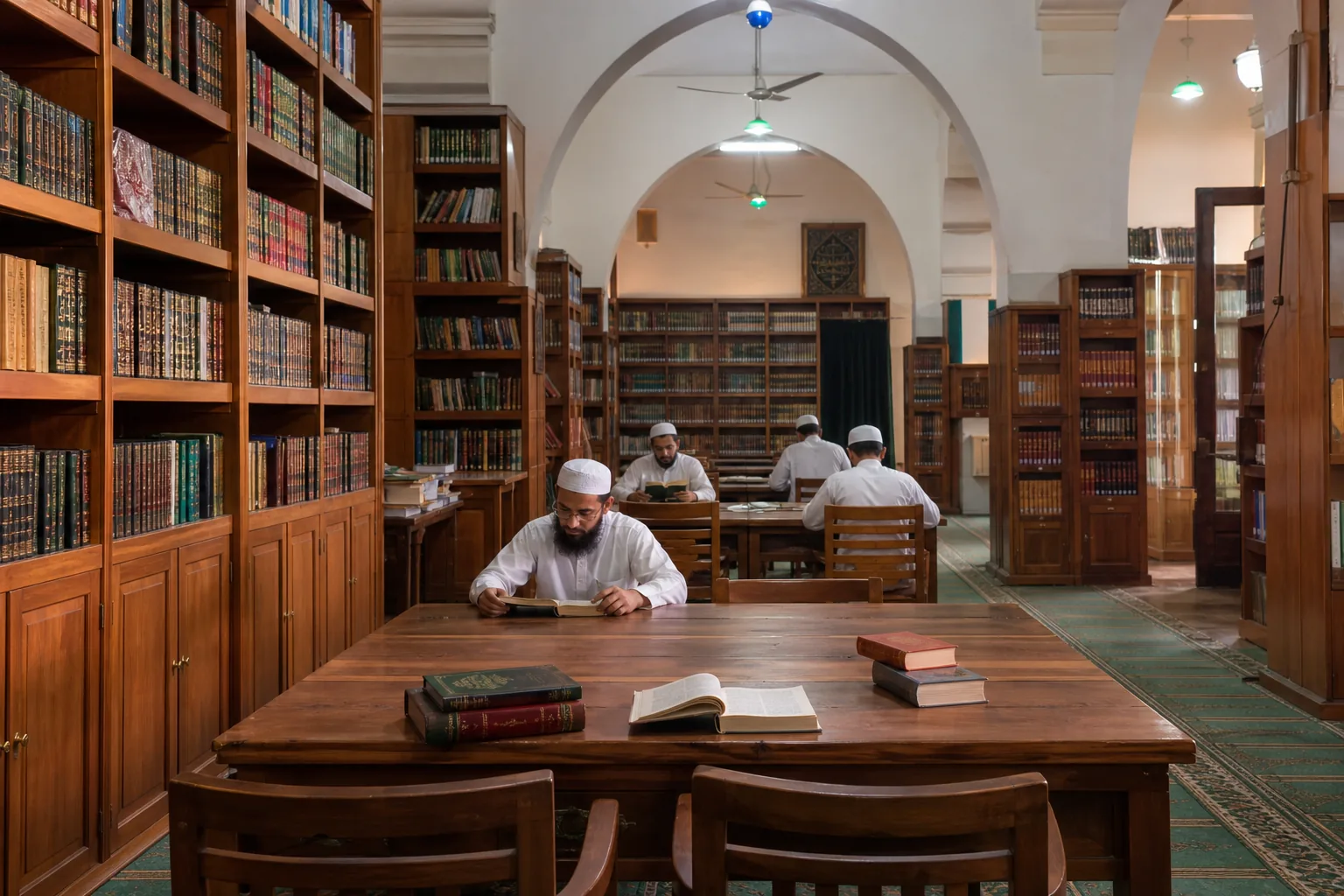
08Library & Learning Resources
Curated books, publications, digital resources and responsible access supporting students and scholars.
 09
09Khanqah & Character Formation
Spiritual guidance, remembrance, reform of character and disciplined living in the light of Qur’an and Sunnah.
OFFICIAL PROGRAM IDENTITIES
Signature academic pathways
Academic learning, scholarly service and character formation are connected through one institutional journey.

FIND THE RIGHT ROUTE
From first enquiry to the right learning or scholarly service.
Departments are not isolated pages. Each one connects to a program, resource, guidance service or next action.
FOR STUDENTS & FAMILIESAdmissions guidance
Choose a program, understand the application route and confirm current availability.
FOR ACADEMIC CONTEXTFaculty & Scholars
See the teaching, leadership and scholarly identities behind the academic pathways.
FOR LEARNING RESOURCESDigital Library
Move from departments into approved books, references and institutional learning resources.